- sales@motionsensors.com
- Monday - Thursday: 8AM to 5PM EST
- 252-331-2080

Hall Effect Zero Speed Sensors
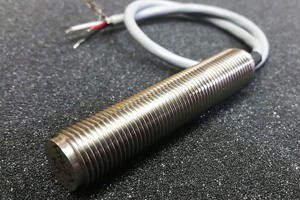
Hall Effect speed sensors are integrated units containing the transducer, magnet (as applicable), and electronics that are used to provide zero speed sensing. We manufacture them in both oriented and non-oriented models. In addition to the standard models, all Hall Effect series sensors are available in custom lengths, diameters, configurations, and mounting threads.
These hall effect gear tooth sensors are designed to sense the angular rotation of ferrous metal targets and are popular for a wide variety of applications including propulsion gear speed and direction, shaft speed and direction, as well as process-based applications that require operation at extremely slow speeds, such as measuring movement of a conveyor.
Motion Sensors Inc. specializes in customizing our sensors, and these hall effect transducers can be made to suit in terms of electrical specifications such as output logic levels, as well as physical parameters such as thread types, lengths, mounting flanges, cabling, and connectors.
HALL EFFECT SPEED SENSOR TYPES
- Oriented Hall Effect Zero Speed Sensors – H Series – The H series of Hall Effect sensors are oriented, which means that they require orientation to the direction of target movement. They are recommended for use with finer pitch targets, and can be optimized to detect both fine and large pitch targets.
- Non-Oriented Hall Effect Sensors – HN Series – The non-oriented HN series does not require orientation to the target, offering ease of installation. They are engineered to provide extremely accurate tooth edge detection when used with larger pitch targets.
- Quadrature Output Dual Channel Speed Sensors – HD Series – The HD series offers dual channel output and, where required, directional logic. The output frequency of the HD sensor has a digital pulse that can be correlated to determine flow rate, RPM, or velocity.
- Intrinsically Safe Hall Effect Speed Sensors – Featuring the same high-quality construction and materials as our standard Hall Effect sensors, our Intrinsically Safe Hall Effect sensors are certified to CSA (with NRTL/C), LCIE to ATEX (2014/34/EU) and IECEx.
- Explosion Proof Ex d Hall Effect Speed Sensors – Ex d certified to ATEX and IECEx and comply with the essential health and safety requirements relating to the design and construction of equipment and protective systems intended for use in potentially explosive environments.
CUSTOM HALL EFFECT SPEED SENSOR MODELS
Our Hall Effect speed sensors are available in custom lengths, diameters, configurations, and mounting threads. Custom operating specifications (output options, etc.) are available, as well as options such as pigtail leads or NPT threading. See additional sensor customization options.
PRINCIPLES OF OPERATION
Motion Sensors Hall Effect (HE) sensors are true zero speed sensing devices that utilize a special solid state transducer chip that produces an output voltage when subjected to magnetic field changes. Hall Effect transducers are produced in many different sensitivities, configurations, and output types; analog or digital. Motion Sensors standard HE sensors fall into two general categories – oriented, which requires orientation to the direction of travel of the target; and non-oriented, which does not, but generally has poorer performance when used with finer pitch targets. Standard series are Oriented: H, HD and Non-oriented: HN.
Hall Effect sensors have limitations: “drag” when used with internal magnetics (zero-drag designs are possible employing external magnetic excitation), limited maximum sensing distance (compared to other technologies such as RF), and limited maximum operating temperature (compared to variable reluctance – VR).